Red Fox 3D Christmas Ornament: A Digital Design Guide
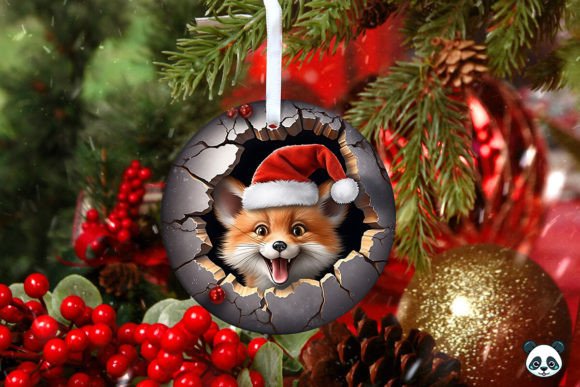
The holiday season brings a unique set of challenges for creative professionals and small business owners alike. You are constantly balancing the need for fresh, eye-catching visuals with the tight deadlines that December inevitably brings. This is where digital assets like the Red Fox 3D Christmas Ornament become invaluable. Rather than spending hours illustrating a character from scratch or wrestling with complex 3D modeling software, you can leverage high-quality sublimation designs to elevate your product line immediately. This specific design captures the whimsical yet sophisticated spirit of winter wildlife, offering a ready-to-use solution for those looking to expand their seasonal offerings without compromising on quality.
At its core, this asset is more than just a picture; it is a functional component of a larger production workflow. The visual characteristics of the Red Fox design lean heavily into a soft, watercolor aesthetic that has been rendered with depth to simulate a three-dimensional form. When applied to a physical object, such as a ceramic bauble, the artwork tricks the eye, making the fox appear as though it is peeking out from the surface rather than sitting flat against it. This illusion of depth is crucial in today's market, where consumers are drawn to products that feel tactile and premium. The color palette typically involves warm russets and oranges contrasting against cool winter whites and blues, creating a natural visual hierarchy that draws attention instantly on a crowded retail shelf or a scrolling social media feed.
Strategic Applications for Sublimation Entrepreneurs
For entrepreneurs and marketers, understanding where this type of design fits within your broader strategy is key to maximizing return on investment. The Red Fox 3D Christmas Ornament is versatile enough to serve multiple roles across different platforms. In the realm of packaging design, this imagery can be used not just on the ornament itself, but on the accompanying boxes and tags to create a cohesive brand identity. Imagine a line of holiday gifts where the unboxing experience features the same charming fox motif found on the product; this consistency reinforces brand recognition and perceived value.
Beyond physical products, these digital files are exceptional for social media graphics. Content creators can use the high-resolution PNGs to craft engaging Instagram stories, Pinterest pins, or Facebook ads that promote their holiday collections. Because the background is often designed to be seamless or easily adaptable, it works beautifully as a backdrop for text overlays announcing sales or shipping deadlines. For publishers and bloggers, this asset offers a way to decorate editorial content during the holidays without resorting to generic, overused stock photography. It adds a touch of bespoke charm to blog headers or email newsletters, signaling to your audience that you pay attention to detail.
The utility of this design extends into web design as well. While primarily intended for print via sublimation, the clean lines and transparent backgrounds of the PNG files allow web designers to incorporate the fox into seasonal landing pages. Whether it is a small icon in the navigation bar or a hero image for a limited-time offer, the 3D effect translates well to digital screens, adding a layer of polish that flat vectors sometimes lack.
Enhancing Brand Perception Through Visual Depth
In the world of branding, perception is reality. Using a standard, flat clipart image can sometimes make a brand feel amateurish or dated. Conversely, integrating a 3D design element like this red fox suggests a higher level of craftsmanship. It tells the customer that the creator cares about the visual experience. This psychological impact is subtle but powerful. When a consumer sees an ornament that looks like it has volume and texture, they subconsciously attribute those qualities to the brand itself—viewing it as modern, professional, and attentive to trends.
Readability and visual hierarchy are also improved when using 3D-style elements. Because the fox illustration naturally commands attention due to its shading and perspective, it serves as an excellent anchor point for other design elements. If you are adding text to the ornament wrap, the 3D nature of the fox allows you to position typography around it without the two competing for dominance. The fox becomes the focal point, while your brand name or a holiday message can sit comfortably in the negative space, ensuring that both the art and the information are legible.
Furthermore, consistency is the backbone of any strong brand identity. If you have established a woodland or nature-inspired theme for your business, introducing the Red Fox seamlessly integrates with existing assets. It avoids the jarring effect of mixing disparate art styles. By sticking to a unified aesthetic—watercolor textures, natural subjects, and soft lighting—you build a recognizable visual language that customers begin to associate specifically with your shop.
Practical Implementation and Technical Considerations
Turning a digital download into a physical product requires a bit of technical know-how. When you purchase the Red Fox 3D Christmas Ornament package, you are typically receiving a high-resolution PNG file, often sized at 5 inches by 5 inches at 300 DPI. This resolution is critical. Anything lower than 300 DPI risks appearing pixelated or blurry once printed and transferred onto the curved surface of an ornament. Before you begin your production run, always verify the dimensions in your design software to ensure the image hasn't been inadvertently scaled down.
Working with sublimation designs also means understanding the limitations and strengths of the medium. Sublimation ink bonds with polyester coatings, which is why these ornaments usually have a special polymer layer. The vibrant colors of the watercolor fox will shine on this surface, but color management is essential. It is highly recommended to run a test print on plain paper first to check color accuracy. Monitors display in RGB (light), while printers use CMYK (ink), so slight shifts in the shade of the fox's fur or the background snow are common. Adjusting your printer profile or doing a soft proof in Photoshop can save you from wasting materials.
When preparing the file for a skinny or standard ornament wrap, consider how the design wraps around the curve. A 3D design helps mitigate some distortion because the shading already implies curvature, but you must still align the seams carefully. Most templates provided with these downloads include guides for where the edges meet. Pay close attention to these markers to ensure the fox's face isn't split awkwardly across the back of the ornament.
- File Verification: Always unzip your files immediately and check that the PNG has a transparent background if required for your specific project layout.
- Software Compatibility: Ensure your sublimation software (such as Photoshop, Illustrator, or specialized heat press software) supports high-resolution PNGs with transparency.
- Licensing Clarity: Review the license terms included in your digital download. Most commercial font and design assets allow for unlimited physical product sales but restrict reselling the digital file itself.
- Pairing Elements: If you are adding text, choose a sans serif font for a modern look or a handwritten font to match the organic feel of the watercolor fox. Avoid overly decorative serif fonts that might clash with the soft edges of the illustration.
Ultimately, the value of the Red Fox 3D Christmas Ornament lies in its ability to bridge the gap between creative vision and efficient production. It allows designers to focus on the bigger picture of their brand strategy while relying on professional-grade assets to handle the detailed execution. Whether you are a hobbyist making gifts for family or a marketer launching a full holiday collection, this type of digital tool empowers you to create products that stand out in a saturated market.